
How to Spot Problem Gambling at Princess Casino for France
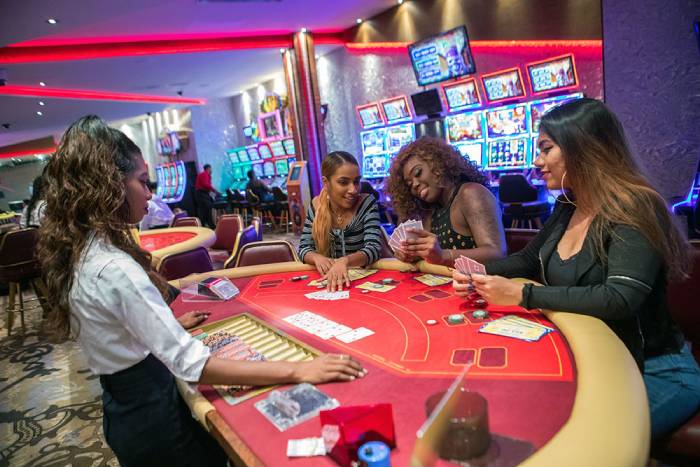
I have dedicated years counseling players across France on sustaining a healthy relationship with online gaming, and I want to provide that experience directly with you. When you log into Princess Casino, the thrill of the game should always stay a source of entertainment, never a source of distress. Detecting the early signs of problem gambling is not about accepting weakness; it is about regaining control before a hobby begins to dictate your financial and emotional state. In the French market, where the digital gaming landscape is closely supervised by the Autorité Nationale princesscasino protection des joueurs Jeux, we have a unique framework that ensures player protection, but the first step always begins with personal honesty. I will walk you through the specific behavioral shifts, financial red flags, and emotional triggers that indicate a shift from recreational play to compulsive behavior, ensuring you have the tools to self-assess and act decisively.
The way Princess Casino’s Responsible Gambling Tools Shield You
I designed my advisory approach to match the robust player protection infrastructure available at Princess Casino. The platform provides concrete, enforceable tools that act as external circuit breakers when internal willpower falters. You have access to deposit limits that limit the amount you can fund over daily, weekly, or monthly periods. I advise setting these limits immediately, even if you think your play is healthy, because they turn an abstract intention into a hard boundary. The reality check feature offers pop-up notifications at intervals you set, breaking the time distortion spell by alerting you exactly how long you have been active. I also guide players toward the session history log, which shows an unfiltered, data-driven view of net expenditure over time—this often faces denial with objective facts. These tools are not punitive; they are structural supports that preserve the experience aligned with the entertainment purpose you originally pursued when you registered at the platform from your home in France.
Social Isolation and Interpersonal Stress as Crucial Markers
In my consulting practice across France, I have observed that social isolation is often the external symptom that relatives notice first. Problem gambling grows in isolation. You may start declining invitations to weekend gatherings in the French countryside or steering clear of cultural outings in cities like Strasbourg because they clash with your continuous play routine. The online format of Princess Casino makes this isolation hard to detect, as you can be sitting at the table at a dinner table while thinking through odds and arranging the next deposit. I view it a major alarm when you prefer the company of the screen over the company of people who value you. Relationship strain escalates when financial secrecy enters the dynamic; trust breaks down rapidly once a partner finds out about undisclosed losses. If conversations with loved ones regularly turn defensive when the topic of free time or money comes up, the gambling behavior is no longer a private recreation—it is an harmful element in your social fabric. Rebuilding ties with your community is a powerful corrective step.
Recognizing the Psychological Change from Recreation to Addiction
When I consult with players who are doubtful about their behaviors, I always start by differentiating between a planned leisure activity and a emotional need. At Princess Casino, a recreational player signs in with a pre-set budget and sees losses as the cost of the enjoyment, much like purchasing a ticket to a concert in Paris. The shift toward compulsion occurs when the brain ceases looking for entertainment and starts pursuing escape from unpleasant emotions. You might observe you are no longer participating to win but participating to escape stress, boredom, or loneliness. This neurological rewiring makes the result of the bet less important; the action of placing the bet itself transforms into the mental crutch. I have seen that French players often miss this sign because they continue functional in their daily lives, holding down jobs in cities like Lyon or Marseille, yet inside they are counting the minutes until the next session. The key marker is purpose: if the primary goal is altering your mood rather than enjoying the game mechanics, you have crossed a critical psychological threshold.
FAQ
What is the first concrete step I should take if I suspect a problem?
I suggest immediately setting a deposit limit on your Princess Casino account that is less than your current average weekly spend. This creates an immediate external boundary. At the same time, retrieve your last three months of transaction history and mark every deposit that came from a source besides disposable income. This objective data often pierces denial and provides you a clear severity baseline to review with a professional or a trusted person.
Will self-exclusion at Princess Casino block me from all French gambling sites?
Self-exclusion at Princess Casino relates specifically to your account on this platform. That said, I strongly recommend you to also sign up with the ANJ’s national self-exclusion list, which expands the ban across all licensed online operators in France. The mix of platform-level exclusion and the national registry creates a comprehensive barrier. You ought to activate both concurrently to erase the risk of shifting your behavior to another site during a moment of weakness.
Can set different limits for different game types at Princess Casino?
At present, the responsible gambling tools at Princess Casino apply account-wide deposit and session limits as opposed to per-game restrictions. I recommend you to use the session time reminder feature to control engagement with specific high-intensity games manually. The reality check pop-up will break play irrespective of which game you are in, giving you a moment to consciously decide whether to continue or exit. Treat this interruption as a mandatory decision point, not an annoyance.
How should I approach a family member I think has a gambling problem?
I recommend starting the conversation in a neutral setting outside the home, using particular, non-accusatory observations about behavioral changes—missed events, unexplained financial stress, or increased secrecy. Avoid mentioning money lost; focus on the emotional distance you have noticed. Present the Joueurs Info Service helpline number as a tool for both of you to comprehend the situation, not as a punishment. The goal is to initiate a dialogue, not to obtain a confession.
Is my data kept confidential when I use responsible gambling tools?
Yes, enabling any responsible gambling feature at Princess Casino is processed with rigorous confidentiality under French data protection laws and ANJ regulatory requirements. The platform’s compliance team processes self-exclusion and limit changes internally, and this information is not disclosed with third parties for marketing or any other purpose. Your selection to activate these tools is a safeguarded private matter between you and the operator’s responsible gaming department.
What takes place when my self-exclusion period ends?
When the exclusion period ends, your account does not automatically resume. You must send a formal request to reactivate it, and a mandatory seven-day cooling-off period is enforced before access is returned. I view this waiting period as a critical final checkpoint. Use those seven days to honestly judge whether the underlying triggers have been dealt with. If any doubt persists, I advise extending the exclusion or keeping the account permanently closed as a clear boundary.
Recognizing problem gambling is a demonstration of clarity, rather than condemnation. I have outlined the psychological, financial, and social signals that signal when entertainment has evolved into a threat, and I have provided you the exact tools and French resources on hand to restore balance. The deposit limits, reality checks, and self-exclusion mechanisms at Princess Casino are designed to serve you, and the national support network remains available with confidential, professional assistance. Your relationship with gaming should enrich your life, rather than quietly dismantle it. Evaluate your patterns honestly, use the structural protections without hesitation, and remember that the strongest move you can make is the decision to pause and recalibrate.
Financial Warning Red Flags That Demand Prompt Attention
I encourage you to review your transaction history at Princess Casino with brutal honesty. The most glaring financial red flag is the breakdown of the boundary between gaming funds and necessary living expenses. If you have at any time reallocated money allocated for your rent in Bordeaux, utilities, or groceries to fund a deposit, the scenario requires immediate intervention. I also seek the “chasing” pattern, where a player raises bet sizes or deposit frequency in an attempt to regain previous losses quickly. This often creates a dangerous cycle where a single substantial loss triggers a desperate financial scramble. Another understated sign I have observed among French users is the acceptance of “emergency” loans from friends or consumer credit lines particularly to fill a gap caused by a gaming session. You should also examine your emotional response to withdrawals; if cashing out a win seems painful because it removes ammunition for further play, your financial relationship with the game has flipped. The platform supplies deposit limit tools precisely to stop these patterns before they escalate into long-term debt.
Perception of Time and the Breakdown of Everyday Routine
One of the most dangerous aspects of problem gambling I have observed is the distortion of time perception. A session at Princess Casino intended to last thirty minutes can expand into five hours without your conscious awareness, a occurrence often described by players in fast-paced urban environments like Toulouse or Nice. I describe problematic time use as any pattern that consistently interferes with essential life activities. You should be worried if you are losing sleep to play late at night, skipping social engagements with friends at a local café, or overlooking professional responsibilities because you are mentally rethinking hands or spins. I also want you to consider “time debt”—the hours you spend studying strategies, analyzing past sessions, or planning future deposits. When the cognitive space occupied by gaming surpasses the time spent on your primary career, family, or physical health, the hobby has become a structural danger to your life. Establishing strict session time limits is not a restriction on fun; it is a preservation of your real-world identity.
Building a Long-term Aftercare Lifestyle
After you have settled through restrictions, exclusion, or therapy, I focus on helping you build a lifestyle where the void left by gambling is occupied with genuinely rewarding alternatives. The goal is not simple abstinence but the cultivation of what I call “competitive joy” in other domains. I recommend reconnecting with physical activities that generate natural dopamine regulation—becoming part of a local football club, cycling through the Loire Valley, or hiking the Calanques near Marseille. Creative pursuits like joining a photography collective or learning an instrument stimulate the same problem-solving faculties that games of chance commandeer. I also highlight the importance of rebuilding financial literacy through budgeting apps that make playful saving goals in a healthy way. The French lifestyle offers a rich palette of social and cultural engagement, from community festivals to volunteer associations, that can replace the isolated screen time. Sustainable recovery means you no longer feel a gap that needs filling; you sense a full schedule that leaves no room for compulsion.
Professional Support Assistance Available Across France
When in-house tools and platform limits are not enough, I direct you toward the tailored support ecosystem that is available throughout France. The first point of contact I advise is the national helpline Joueurs Info Service at 09 74 75 13 13, which provides private, French-language counseling from addiction specialists who recognize the cultural nuances of gaming in our country. You can also use their live chat service if you favor text-based communication. For systematic therapeutic intervention, I refer players to CSAPA centers—Centres de Soin, d’Accompagnement et de Prévention en Addictologie—which are government funded facilities found in every major French city, from Rennes to Montpellier, supplying free psychological consultations. I also suggest exploring the online self-assessment module on the ANJ official website, which provides an immediate, anonymous evaluation of your risk level. These resources are available precisely because problem gambling is a recognized public health matter in France, and interacting with them entails no legal or social penalty whatsoever.

Monetary Counseling for Gambling-Related Debt
In addition to psychological support, I frequently need to tackle the financial wreckage that accompanies severe problem gambling. In France, you can obtain free debt counseling through Points Conseil Budget, local services that assist you reorganize obligations and work out with creditors without judgment. I have witnessed these services effectively intervene to prevent housing evictions and utility cutoffs caused by gambling-related cash flow crises. The Banque de France also provides a formal surendettement filing process for individuals whose debt has become unmanageable, which can legally freeze interest accrual and set up a court-supervised repayment plan. I recommend combining financial intervention with therapeutic support, because resolving the debt without tackling the behavioral driver often leads to a repeat cycle. The goal is to remove the financial debris while at the same time rewiring the habits that generated it.
Peer Support Networks and Group Recovery
I have observed remarkable recovery results when individuals connect with others who have their lived experience. In France, you can join local chapters of Gamblers Anonymous, which organize regular meetings in French in cities including Paris, Lyon, and Bordeaux, providing a structured twelve-step framework tailored specifically for gambling compulsion. The strength of these groups is rooted in the dissolution of shame; listening to another person articulate the exact thought patterns you thought were uniquely yours is immensely liberating. I also suggest exploring online forums managed by addiction professionals, which offer 24/7 access to community support when in-person meetings are not feasible. The combination of professional therapy and peer accountability forms a dual safety net that substantially reduces relapse rates. Recovery is not a lonely journey, and France offers a robust communal infrastructure to walk it with you.
Emotional Volatility and Mood Dependency on Outcomes
I want to discuss the emotional rollercoaster that marks a dependency has formed. Safe play at Princess Casino generates mild excitement or minor frustration, both of which dissipate quickly. Problem gambling generates extreme emotional states that linger and leak into unrelated areas of your life. If a run of losses makes you short-tempered with your significant other or kids for the whole night in your house in Lille, the game is not anymore confined within its own limits. I have counseled many gamblers who report a empty, mood collapse after a win because the high was fleeting and the desire to repeat it is immediate. You should also track secrecy-induced anxiety. If you catch yourself being dishonest about the duration of your playtimes, concealing bank records, or sensing a wave of fear when someone looks at your phone display, you are suffering from the emotional burden of a hidden compulsion. Real enjoyment does not require a cover story. The emotional foundation I advise is detachment to the outcome; the pleasure must derive from the activity itself, not the balance change.
The Self-Exclusion Mechanism and How to Enable It
There are moments in my consultations when a player recognizes that a brief halt is insufficient and a total restriction is necessary. Princess Casino offers a self-exclusion function that I view one of the most decisive acts of self-care available. When you enable self-exclusion, you are actively asking the platform to deny your access for a set timeframe—extending from six months to five years, or even forever. I recommend you to treat this not as a defeat but as a strategic reset of your cognitive habits. Over the exclusion period, the platform will also take steps to stop marketing messages from getting to you, limiting outside triggers that could weaken your determination. For French residents, this action also aligns with the wider national self-exclusion system managed by the ANJ, which can expand the restriction across multiple licensed operators. I constantly remind players that self-exclusion is only reversible after the picked duration finishes and a cooling-off period elapses; this inherent delay is a deliberate design to prevent impulsive re-engagement during times of weakness.
